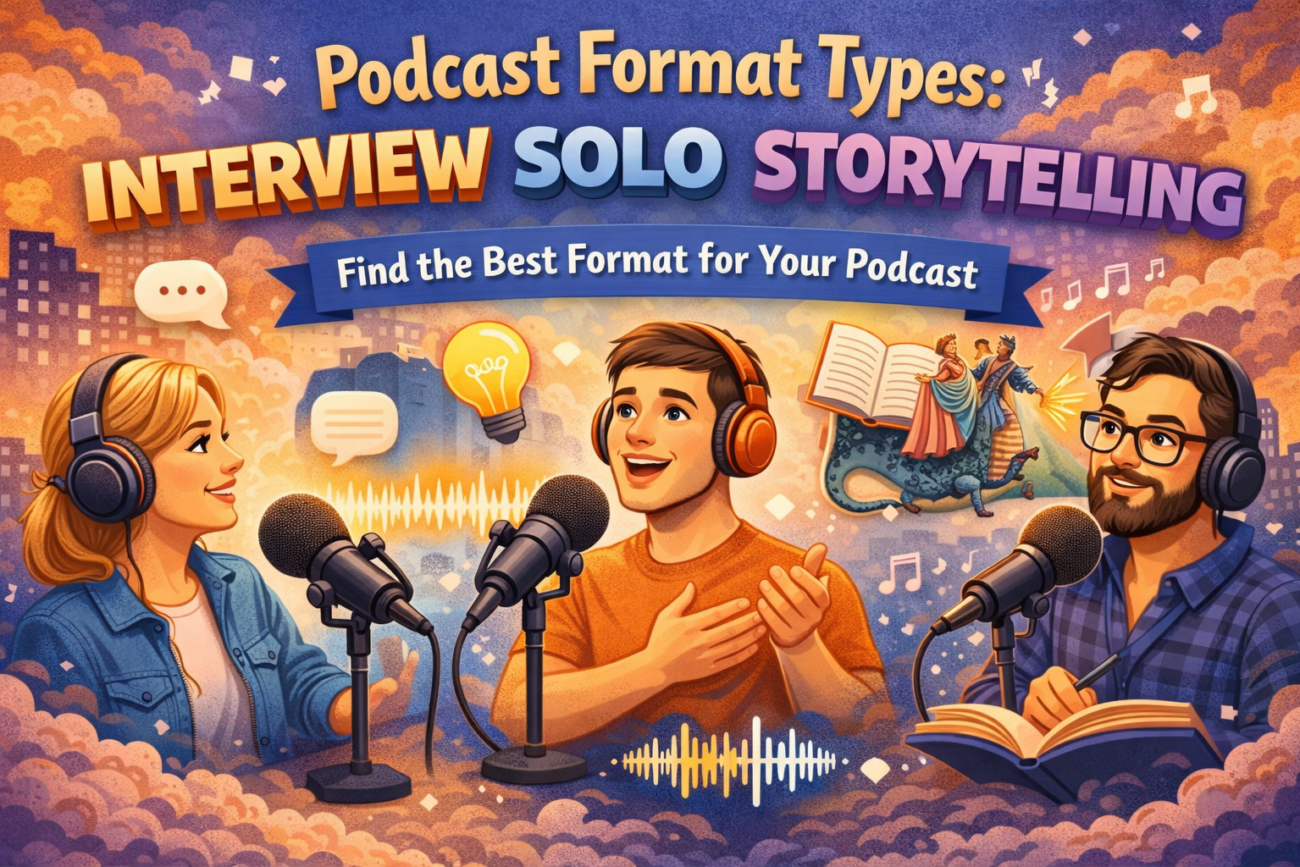
Starting a podcast can be overwhelming, especially when it comes to choosing the right podcast format. Your format defines how your episodes are structured, how you engage your audience, and the overall personality of your podcast. From interview-based shows to solo deep dives and immersive storytelling, the format you select plays a huge role in your podcast’s success.
In this guide, we’ll explore the main podcast format types, their advantages, challenges, and provide examples to inspire your next show. By the end, you’ll know which format best suits your niche, goals, and style.
Why Choosing the Right Podcast Format Matters
Your podcast format impacts:
- Content Planning: Different formats require different preparation, research, and scripting.
- Listener Engagement: Format influences how long listeners stay, how they relate to your content, and whether they subscribe.
- Brand Identity: The format contributes to your podcast’s tone, style, and personality.
- Production Workflow: Some formats require editing, guest coordination, or scripting, affecting time and effort.
1. Interview Format Podcasts
The interview format is one of the most popular podcast styles. It involves a host or hosts—conversing with guests, often experts, influencers, or industry leaders.
Features
- Focus on guest expertise and experiences
- Can include multiple segments or listener questions
- Typically structured but flexible in tone
Advantages
- Leverages Guest Authority: Guests bring credibility and new perspectives.
- Expands Reach: Guests often promote episodes to their audiences, attracting new listeners.
- Variety of Content: Each guest introduces fresh topics and stories.
Challenges
- Scheduling conflicts with guests
- Requires strong interviewing skills
- Editing can be more complex due to multiple voices
Examples of Successful Interview Podcasts
- The Joe Rogan Experience – Long-form interviews with diverse guests
- How I Built This – Entrepreneurs share stories behind successful companies
- The Tim Ferriss Show – Focuses on personal development and productivity insights
Tips for Creating an Interview Podcast
- Research Guests Thoroughly: Prepare insightful questions that bring value to listeners.
- Develop a Consistent Structure: Intro, main interview, Q&A, and closing segment.
- Engage the Audience: Encourage listener questions via email or social media.
- Balance Guest Voice and Host Personality: Ensure the host adds value beyond the guest’s insights.
2. Solo Podcast Format
A solo podcast is hosted by a single individual sharing insights, advice, stories, or commentary without external guests.
Features
- Host-driven content
- Can include tips, opinion pieces, or storytelling
- Episodes may vary in length and style
Advantages
- Complete Control: You decide content, pacing, tone, and style.
- Simple Scheduling: No guest coordination is required.
- Builds Personal Brand: Listeners connect deeply with your personality and expertise.
Challenges
- Requires strong content ideas to maintain listener interest
- Risk of sounding monotonous without dynamic segments
- Demands confidence in speaking and presentation
Examples of Successful Solo Podcasts
- The GaryVee Audio Experience – Marketing, business, and motivation advice
- Optimal Living Daily – Short solo episodes reading curated personal development content
- The Daily Stoic – Daily reflections and teachings by Ryan Holiday
Tips for Creating a Solo Podcast
- Plan Your Episodes: Outline key points to maintain focus and flow.
- Engage Listeners Directly: Use storytelling, questions, and calls-to-action.
- Keep Episodes Concise: Especially for time-sensitive topics or daily shows.
- Use High-Quality Audio: Your voice carries the entire episode, so invest in a good microphone.
3. Storytelling / Narrative Podcast Format
Storytelling podcasts immerse listeners in narrative-driven content, combining research, interviews, sound design, and music.
Features
- Episodes are structured as stories with a beginning, middle, and end
- May include voice actors, sound effects, and music
- Often serialized across multiple episodes
Advantages
- Highly Engaging: Captivates listeners with emotional storytelling and suspense.
- Versatile: Can cover true crime, history, fiction, or investigative topics.
- High Retention: Listeners often binge multiple episodes due to narrative arcs.
Challenges
- Intensive production process: scripting, editing, and sound design
- Requires research and creative storytelling skills
- Longer preparation time per episode
Examples of Successful Storytelling Podcasts
- Serial – True crime investigative series
- This American Life – Human interest stories with narrative depth
- Lore – Historical folklore and myths with immersive storytelling
Tips for Creating a Storytelling Podcast
- Outline Your Story Arc: Plan episodes with a clear beginning, middle, and end.
- Use Sound Design Effectively: Music, sound effects, and pacing enhance immersion.
- Research Thoroughly: Accuracy and credibility are key, especially for nonfiction stories.
- Create Suspense: Use cliffhangers and episode hooks to keep listeners coming back.
Comparing Podcast Formats
| Format | Pros | Cons | Best For |
| Interview | Diverse perspectives, audience growth, fresh ideas | Guest scheduling, skill needed in interviews | Experts, business, marketing, education |
| Solo | Full control, easy scheduling, personal brand | Maintaining content variety, high demand on host | Advice, commentary, tips, personal growth |
| Storytelling | High engagement, immersive, binge-worthy | Time-intensive, requires research & editing | True crime, history, fiction, investigative |
Hybrid Podcast Formats
Some successful podcasts combine formats to provide variety and keep content engaging:
- Solo + Interview: Host gives advice but occasionally invites guests.
- Interview + Storytelling: Use interviews as the base for narrative storytelling.
- Solo + Storytelling: Host narrates stories or experiences directly to the audience.
Example:
- The Daily combines news reporting (storytelling) with interviews.
- Marketing School uses short solo episodes occasionally featuring expert interviews.
Hybrid formats allow flexibility and creativity while keeping your podcast fresh.
Tips for Choosing the Right Podcast Format
- Align With Your Strengths: Are you comfortable interviewing guests, speaking solo, or crafting stories?
- Consider Your Niche: Storytelling works well for true crime or history, while solo advice podcasts suit business and personal growth.
- Assess Resources: Storytelling and interviews may require editing help, music rights, and additional production tools.
- Think About Audience Preferences: Some audiences prefer long interviews, others bite-sized solo tips, or immersive story arcs.
- Plan for Consistency: Choose a format you can sustain consistently without burnout.
Production Considerations for Each Format
- Interview Podcasts: Scheduling, remote recording tools (Zoom, Riverside.fm), guest prep sheets, multi-track editing.
- Solo Podcasts: Script outlines, editing software (Audacity, Adobe Audition), clear voice delivery, intro/outro music.
- Storytelling Podcasts: Scriptwriting, voiceovers, sound effects, music licensing, episode sequencing.
Conclusion
Choosing the right podcast format is a strategic decision that impacts your content, audience engagement, and brand identity.
- Interview Format: Ideal for leveraging guest expertise, variety, and credibility.
- Solo Format: Perfect for personal branding, advice, and direct audience connection.
- Storytelling Format: Best for immersive, narrative-driven content that hooks listeners.
Some podcasters even blend formats to maximize creativity and audience appeal. Whatever format you choose, ensure it aligns with your strengths, resources, and audience preferences.
Your format sets the tone for your podcast, influences content creation, and defines your listener experience. With the right approach, you can create a podcast that resonates, engages, and keeps your audience coming back episode after episode.
If you’re looking to take your podcast to the next level, these tools can make a huge difference! With Systeme.io, you can easily manage your email marketing, sales funnels, and grow your audience seamlessly. And for all your creative podcast merchandise needs, Tapstitch lets you design and sell custom products directly to your fans. These platforms are perfect for podcasters who want to grow, monetize, and connect with their community effortlessly.
