If you’ve ever signed a lease, reviewed property contracts, or handled financial reporting, you’ve probably come across the term lessor. But what does it really mean? Understanding the lessor meaning is essential not just in real estate, but also in accounting, corporate leases, and legal contracts.
Whether you are a landlord, a business owner, or an accounting professional, knowing who a lessor is and how their rights and responsibilities differ from a lessee can save you from legal pitfalls and help optimize lease management.
In this complete 2026 guide, we’ll cover:
- Lessor definition in law
- Lessor meaning in accounting
- Key differences: Lessor vs lessee
- Practical examples of a lessor in real-life agreements
- Expert tips, common mistakes, and FAQs
By the end, you’ll fully understand how to navigate lease agreements like a pro.
What Is a Lessor? (Lessor Definition in Law)

The lessor definition in law is:
A lessor is the party who owns an asset or property and grants its use or possession to another party (the lessee) under a lease agreement.
In simple terms:
- The lessor owns the asset (property, equipment, or vehicle)
- The lessee pays rent or lease payments to use the asset
- Legal obligations and rights are defined in the lease agreement
Key legal principle: A lessor retains ownership while granting temporary possession to the lessee.
Lessor vs Lessee: Understanding the Difference
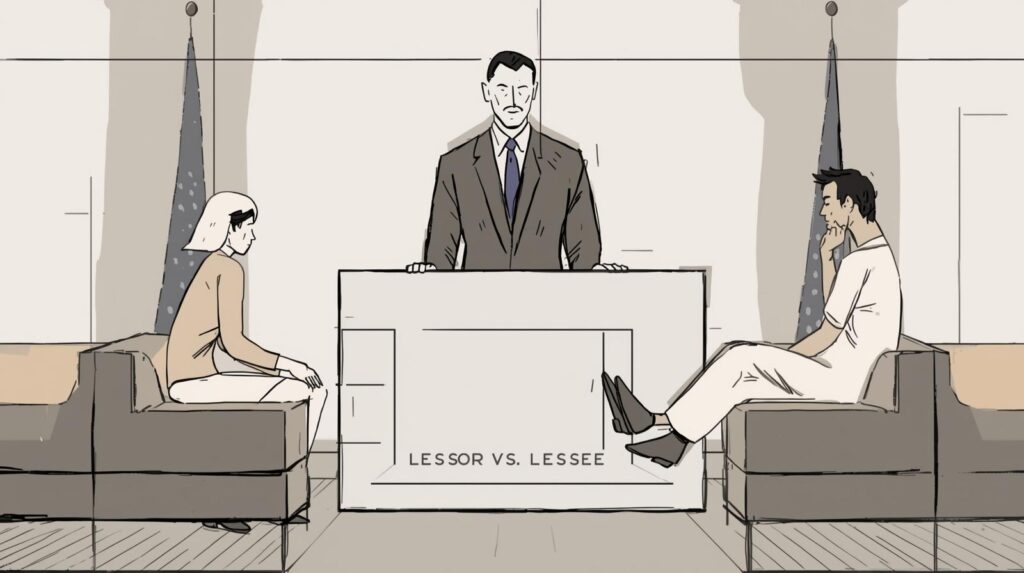
Many people confuse lessor and lessee. Here’s a clear breakdown:
| Role | Definition | Rights | Obligations | Example |
| Lessor | Owner of the asset granting use | Receives rent, retains ownership | Maintain the property, ensure lawful use | Landlord renting an apartment |
| Lessee | User of the asset | Right to use property | Pay rent, follow lease terms | Tenant leasing an office space |
Key Points:
- Lessor = Owner
- Lessee = User
- Payments flow from lessee → lessor
- Legal liability is shared based on lease clauses
Understanding this distinction is critical in both legal and accounting contexts.
Lessor Meaning in Accounting
The lessor meaning in accounting refers to how leases are recorded on financial statements.
From an accounting perspective, a lessor can have operating leases or finance leases, each treated differently under IFRS 16 / ASC 842 standards.
Accounting Treatment for Lessors
| Lease Type | Accounting for Lessor | Example |
| Operating Lease | Asset remains on lessor’s balance sheet; rental income recognized over time | Leasing a vehicle to a client for 3 years |
| Finance Lease | Asset is derecognized; lease receivable recognized | Selling equipment under a long-term lease where lessee bears risks/rewards |
Example Calculation:
- Equipment cost: $100,000
- Lease term: 5 years
- Annual lease payment: $22,000
Operating Lease: Lessors keep the $100,000 asset and recognize $22,000/year as rental income.
Finance Lease: Lessors recognize $100,000 as lease receivable and remove the asset from the books, recording interest income over time.
Lessor Example Sentence
Understanding the landlord is easier with real-life examples.
- Real Estate: “The lessor agreed to lease the office building to the company for five years.”
- Equipment Lease: “Under the contract, the lessor retains ownership of the machinery while the lessee makes monthly payments.”
- Vehicle Lease: “The car company acts as the lessor, allowing customers to use cars under lease agreements.”
These examples illustrate how lessors retain ownership and receive compensation for use.
Practical Uses of a Lessor in Lease Agreements
- Real Estate Leasing: Landlords leasing apartments, office spaces, or commercial buildings.
- Equipment Leasing: Companies leasing machinery, vehicles, or tech equipment.
- Intellectual Property: Licensing patents, trademarks, or software.
- Financial Instruments: Banks or finance companies leasing assets to clients.
Pro Tip: A well-structured lease agreement protects the lessor from damage, defaults, or legal disputes while ensuring predictable income.
Lessor vs Lessee in Detail
Key Differences in Legal Rights
| Aspect | Lessor | Lessee |
| Ownership | Retains full ownership | No ownership rights |
| Payment | Receives rent | Pays rent or lease installments |
| Risk | Bears risk if property is destroyed (depends on lease) | Bears risk of damage/use in some leases |
| Taxation | Rental income taxed; depreciation on assets | Deducts lease expense or capitalizes if finance lease |
| Contract Control | Defines lease terms | Must comply with terms |
Step-by-Step Guide: How Lessors Protect Their Rights
- Draft a Clear Lease Agreement
- Specify duration, rent, payment schedule, maintenance responsibilities
- Specify duration, rent, payment schedule, maintenance responsibilities
- Include Security Deposits or Guarantees
- Protect against non-payment or property damage
- Protect against non-payment or property damage
- Monitor Lease Compliance
- Regular inspections or usage reports
- Regular inspections or usage reports
- Insurance Requirements
- Ensure lessee maintains adequate insurance coverage
- Ensure lessee maintains adequate insurance coverage
- Default & Termination Clauses
- Predefined remedies for breaches protect lessor’s interests
Accounting Implications for Lessors
Understanding lessor accounting ensures:
- Accurate financial statements
- Compliance with IFRS 16 / ASC 842
- Optimized tax deductions and income reporting
- Proper asset valuation on the balance sheet
Example of Lessor Accounting Entry (Operating Lease)
Scenario: Company leases a machine to a client.
- Monthly rent = $2,000
- Lease term = 24 months
Journal Entry for Lessors:
| Date | Account | Debit | Credit |
| Month 1 | Cash | $2,000 | – |
| Month 1 | Lease Income | – | $2,000 |
This continues monthly until the end of the lease.
Advantages of Being a Lessor
- Steady passive income
- Retain ownership of high-value assets
- Potential tax benefits
- Leverage assets without selling them
- Maintain long-term business relationships
Risks for Lessors
- Asset damage or misuse by lessee
- Payment defaults or delays
- Legal disputes over lease terms
- Maintenance costs if stipulated in the lease
Mitigation Tip: Use clear contracts, insurance, and tenant screening to reduce risks.
Lessor Example Across Industries
Real Estate
- A landlord leases an office building for five years
- Collects monthly rent
- Retains ownership at the end of lease
Equipment Leasing
- Manufacturer leases machinery to a factory
- Lessee pays monthly installments
- Lessor monitors condition and usage
Vehicle Leasing
- Car company leases vehicles to consumers
- Receives monthly payments
- Owns the car until lease completion
FAQ Section (Schema-Style)
1. What is the lessor meaning in lease agreements?
A lessor is the owner of an asset or property who grants its use to another party (lessee) under a lease.
2. What is the difference between lessor and lessee?
The lessor owns the asset and receives rent; the lessee uses the asset and pays rent.
3. How does a lessor account for leases?
Lessors record lease income, retain assets in operating leases, or recognize lease receivables in finance leases according to accounting standards.
4. Can a lessor charge for damages?
Yes, lease agreements often include clauses allowing lessors to charge lessees for property damage beyond normal wear and tear.
5. Is a lessor always a landlord?
Not necessarily. A lessor can be any party granting use of property, equipment, vehicles, or intellectual property.
6. What is a practical example of a lessor?
A car rental company leasing vehicles to customers is a practical example of a lessor.
7. Does a lessor retain ownership?
Yes. Ownership remains with the lessor, while the lessee gains temporary usage rights.
Expert Advice: How Successful Lessors Operate
- Vet lessees carefully: Avoid defaults
- Use strong contracts: Define maintenance, insurance, and payment obligations
- Monitor assets regularly: Reduce wear and misuse
- Leverage accounting software: Track lease income and depreciation efficiently
- Consider tax strategies: Optimize deductions and financial reporting
Comparison Table: Lessor vs Lessee Summary
| Feature | Lessor | Lessee |
| Ownership | Retains | Does not have |
| Payment | Receives rent | Pays rent |
| Accounting | Records income, asset retained | Expenses lease or capitalizes if finance lease |
| Risk | Asset destruction, defaults | Damage to asset, liability for misuse |
| Contract Control | Sets terms | Complies with terms |
Understanding the lessor meaning in lease agreements becomes even more important when drafting or reviewing contracts in 2026’s regulated financial environment. A clearly defined lessor role ensures ownership rights, rental income terms, maintenance duties, and termination clauses are properly structured. When the lessor meaning is misunderstood, disputes over repairs, liability, or payment defaults can quickly arise especially in commercial lease agreements and corporate leasing arrangements.
From a financial standpoint, the lessor meaning in accounting and legal contexts directly impacts revenue recognition, asset valuation, and tax reporting. Whether it’s a property lessor, equipment lessor, or vehicle lessor, correctly classifying the lease type (operating vs finance) ensures compliance with IFRS 16 and ASC 842 standards. Businesses that fully understand the lessor meaning can optimize lease income strategies while maintaining regulatory compliance.
Ultimately, mastering the lessor meaning in lease agreements with practical examples empowers landlords, finance professionals, and business owners to structure stronger contracts. A knowledgeable lessor protects asset ownership, minimizes risk exposure, and secures predictable cash flow. In competitive markets, understanding the lessor meaning isn’t just legal knowledge it’s a strategic business advantage.
Final Verdict: Why Understanding Lessor Meaning Is Critical
The lessor meaning is essential for anyone dealing with lease agreements, whether in property, equipment, or corporate finance.
Proper understanding allows:
- Better financial reporting
- Improved legal protection
- Optimized cash flow
- Reduced risks and disputes
- Stronger lease management practices
A savvy lessor not only earns passive income but also protects assets and ensures long-term profitability.
Take Action
- Review your lease agreements to ensure lessor rights are clearly defined
- Understand accounting implications for lease income
- Implement checks to reduce default risk
- Educate yourself on lessor vs lessee differences
Mastering the lessor meaning is the first step toward effective, profitable lease management in 2026.
