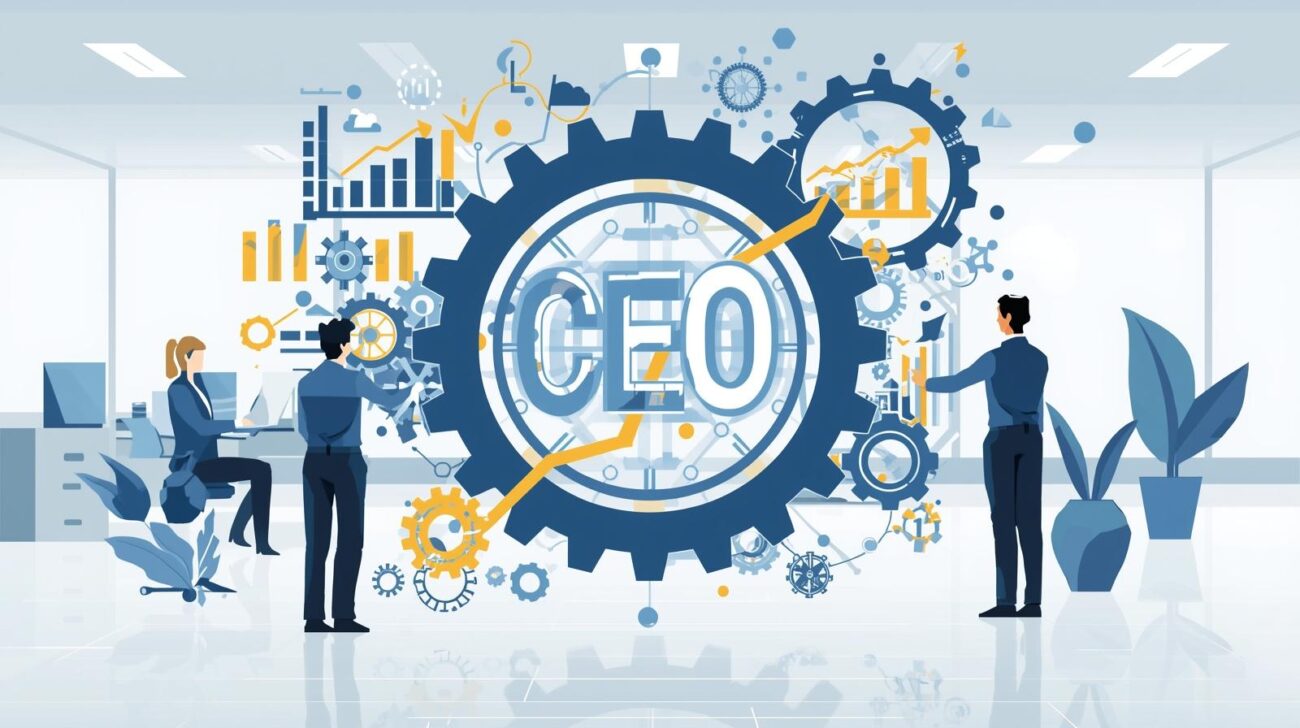
If you’ve ever read a company profile or followed business news, you’ve likely seen the term CEO. But what exactly does it mean, and why is it so important in business? Understanding the CEO meaning in business is crucial for investors, employees, and aspiring entrepreneurs alike.
A CEO isn’t just a title it defines the individual responsible for steering a company’s vision, strategy, and operational execution. Knowing the CEO role and responsibilities can help you navigate corporate hierarchies, understand decision-making power, and evaluate organizational performance.
In this comprehensive 2026 guide, we will explore:
- CEO meaning in business
- What does CEO stand for
- Key duties: CEO role and responsibilities
- Differences: CEO vs manager
- Famous CEOs in the world
- Expert advice, FAQs, and real-world examples
By the end, you’ll understand how CEOs shape corporate strategy and why this role is central to business success.
What Is a CEO? (CEO Meaning in Business)

The CEO meaning in business is:
Chief Executive Officer
A CEO is the highest-ranking executive in a company, responsible for overall strategic direction, major decision-making, and organizational performance.
Key aspects of a CEO:
- Sets company vision and strategy
- Oversees executive leadership team
- Ensures financial performance and growth
- Acts as primary liaison between the board of directors and operations
In short, the CEO is the face and leader of the company, accountable for both successes and failures.
What Does CEO Stand For?
CEO stands for Chief Executive Officer.
- Chief → top-ranking authority
- Executive → responsible for strategic and operational decisions
- Officer → formally appointed role, accountable to the board
This role differs in scope depending on company size and structure. In startups, the CEO may also handle marketing, sales, and HR, while in large corporations, the CEO focuses on high-level strategy.
CEO Role and Responsibilities

The CEO role and responsibilities can be broken down into five main areas:
- Strategic Leadership
- Define company vision and long-term goals
- Align organizational strategy with market trends
- Make high-level business decisions
- Define company vision and long-term goals
- Financial Oversight
- Review budgets, investments, and financial statements
- Ensure profitability and sustainable growth
- Allocate resources efficiently
- Review budgets, investments, and financial statements
- Operational Management
- Oversee executive team and departmental heads
- Ensure projects and operations align with strategy
- Optimize internal processes
- Oversee executive team and departmental heads
- Stakeholder Relations
- Serve as primary communicator to the board, investors, and employees
- Build relationships with partners, clients, and the media
- Serve as primary communicator to the board, investors, and employees
- Corporate Culture and Governance
- Shape organizational values and ethics
- Promote diversity, inclusion, and employee engagement
- Ensure regulatory compliance
- Shape organizational values and ethics
Pro Tip: Great CEOs focus on strategy over micromanagement, empowering managers to handle operational details.
CEO vs Manager: Understanding the Difference
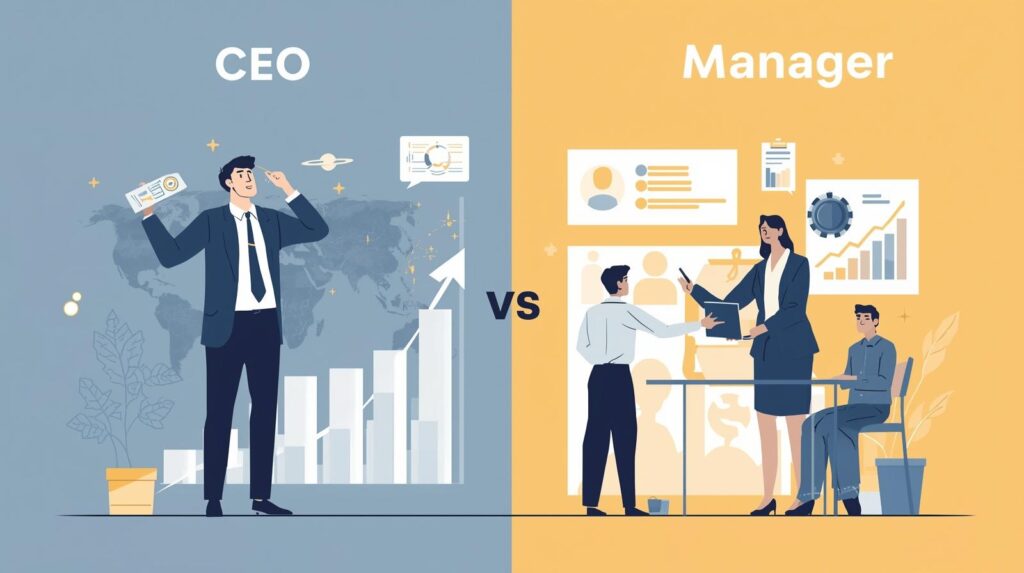
While both are leadership roles, the CEO vs manager distinction is significant.
| Aspect | CEO | Manager |
| Scope | Company-wide | Department or team |
| Decision-making | Strategic, high-level | Operational, day-to-day |
| Accountability | Board of directors, shareholders | CEO, departmental goals |
| Focus | Vision, growth, external relations | Execution, process efficiency, staff management |
| Impact | Influences entire organization | Influences specific team or function |
Key Takeaway: CEOs lead direction and strategy, while managers focus on implementation and team performance.
Famous CEOs in the World
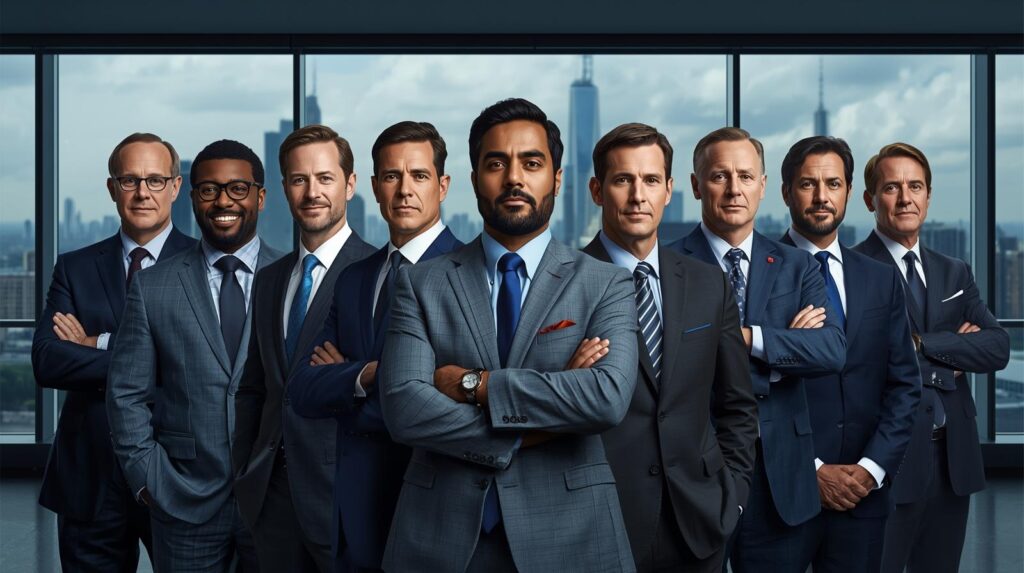
Several CEOs have made a mark due to their vision, leadership, and innovation. Some notable examples include:
| CEO | Company | Known For |
| Elon Musk | Tesla, SpaceX | Innovation in automotive, space, AI |
| Tim Cook | Apple | Operational excellence, sustainability initiatives |
| Satya Nadella | Microsoft | Cloud computing growth, company culture |
| Mary Barra | General Motors | Electric vehicle transformation |
| Sundar Pichai | Alphabet (Google) | AI and digital services expansion |
Studying these leaders provides insights into how effective CEOs balance vision, strategy, and execution.
How the CEO Role Varies by Business Type
Startup CEO
- Wears multiple hats: fundraising, product development, HR, marketing
- Makes hands-on decisions daily
- Drives company growth in uncertain markets
Corporate CEO
- Focuses on long-term strategy
- Delegates operational responsibilities to executives
- Communicates with board, investors, and media
Nonprofit CEO
- Balances mission goals with financial sustainability
- Manages donor relationships
- Oversees program effectiveness
Family Business CEO
- Navigates succession planning and family dynamics
- Ensures operational and cultural continuity
Step-by-Step Guide: How CEOs Drive Success
- Define a Clear Vision
- What is the company’s purpose?
- How will it stand out in the market?
- What is the company’s purpose?
- Set Strategic Goals
- Identify measurable objectives
- Align departments with overarching goals
- Identify measurable objectives
- Build an Effective Executive Team
- Hire leaders with complementary skills
- Delegate responsibility to avoid micromanagement
- Hire leaders with complementary skills
- Monitor Performance Metrics
- Track KPIs, revenue, growth, employee satisfaction
- Adjust strategy based on data
- Track KPIs, revenue, growth, employee satisfaction
- Communicate Transparently
- Regularly update board and staff
- Share successes and challenges
- Regularly update board and staff
- Promote Innovation
- Encourage risk-taking and experimentation
- Stay ahead of market trends
- Encourage risk-taking and experimentation
CEO in Corporate Structure
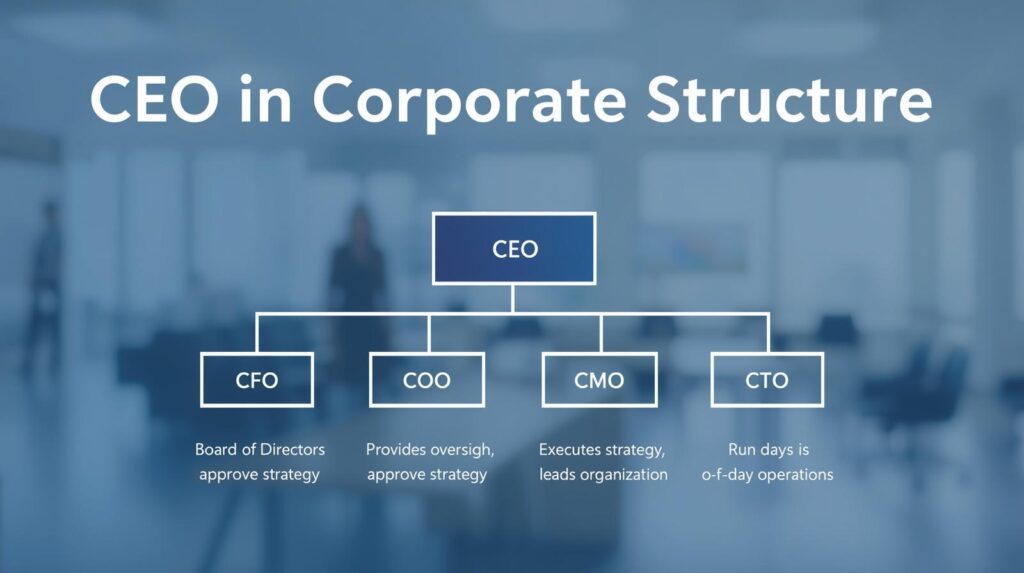
In most companies, the CEO sits at the top of the corporate hierarchy:
Board of Directors
CEO
—————-
CFO COO CMO CTO
- Board of Directors → Provides oversight, approves strategy
- CEO → Executes strategy, leads organization
- Executives → Run day-to-day operations
Understanding this structure helps employees and stakeholders know decision-making authority.
CEO and Decision-Making Authority
A CEO’s decisions impact:
- Corporate strategy and growth
- Mergers and acquisitions
- Capital allocation and investments
- Company culture and reputation
Real-world example:
Elon Musk’s decisions at Tesla on EV production and AI integration shape both short-term results and long-term market positioning.
Mistakes CEOs Should Avoid
- Micromanaging teams → reduces innovation and efficiency
- Ignoring company culture → lowers employee engagement
- Poor communication → creates confusion and low morale
- Overlooking data-driven insights → risks wrong strategic decisions
- Neglecting stakeholder relationships → harms investor confidence
Expert Advice: How Top CEOs Lead
- Focus on Vision and Strategy
- Delegate operational tasks to managers
- Delegate operational tasks to managers
- Prioritize Communication
- Maintain transparency with board, investors, and staff
- Maintain transparency with board, investors, and staff
- Invest in Talent
- Hire leaders who complement strengths and weaknesses
- Hire leaders who complement strengths and weaknesses
- Monitor Metrics Continuously
- Use KPIs to guide strategic pivots
- Use KPIs to guide strategic pivots
- Stay Adaptable
- Adjust to market changes and emerging technologies
CEO vs Other Leadership Roles
| Role | Scope | Focus | Accountability |
| CEO | Entire company | Strategy, growth | Board of directors |
| COO | Operations | Day-to-day processes | CEO |
| CFO | Finance | Financial performance | CEO, board |
| Manager | Team or department | Execution | CEO or executive |
Understanding these distinctions ensures clear responsibilities and reporting structures.
FAQ Section (Schema-Style)
1. What is the CEO meaning in business?
A CEO is the Chief Executive Officer, the highest-ranking executive responsible for company strategy, growth, and operations.
2. What does CEO stand for?
CEO stands for Chief Executive Officer, combining authority, executive decision-making, and corporate leadership.
3. What are the main CEO responsibilities?
Setting strategy, leading executives, financial oversight, stakeholder communication, and shaping corporate culture.
4. How is CEO different from a manager?
CEOs focus on strategic direction and company-wide decisions, while managers oversee specific departments or teams.
5. Can a CEO be a founder?
Yes. Many startups have the founder also serve as CEO, though roles often diverge as the company scales.
6. Who appoints the CEO?
Typically, the board of directors appoints the CEO and evaluates performance regularly.
7. What makes a CEO successful?
Visionary leadership, strategic thinking, strong communication, adaptability, and the ability to build and empower a team.
A Chief Executive Officer (CEO) is the highest-ranking leader in a company, responsible for setting vision, making major decisions, and guiding overall strategy. Influential leaders like Steve Jobs believed that innovation and simplicity are the keys to long-term success, while Elon Musk often emphasizes taking bold risks and thinking beyond limits. Their leadership shows that a CEO must combine creativity with strong decision-making skills.
Many world-famous CEOs also stress the importance of resilience. Jeff Bezos advises leaders to focus on long-term thinking rather than short-term profits, and Satya Nadella highlights the power of empathy and continuous learning in leadership. These insights reveal that successful CEOs adapt to change and invest in innovation.
Another key lesson from top executives like Warren Buffett is to make decisions based on value and integrity. He often reminds entrepreneurs to protect their reputation and think carefully before acting. Overall, the advice from world-famous CEOs shows that strong vision, discipline, and a willingness to learn are essential qualities for effective leadership.
Famous CEOs in History and Today

- Steve Jobs (Apple) – Revolutionized consumer tech
- Jeff Bezos (Amazon) – Built e-commerce and cloud computing empire
- Elon Musk (Tesla, SpaceX) – Innovation-driven leadership
- Mary Barra (GM) – Transforming automotive for EV era
- Satya Nadella (Microsoft) – Cloud-first and culture transformation
Studying their leadership styles provides practical lessons for aspiring CEOs.
Final Verdict: Why CEO Meaning Matters in 2026
The CEO meaning in business is far more than a title. A CEO shapes strategy, culture, and performance, influencing every aspect of an organization.
Understanding the CEO role is essential for:
- Investors evaluating leadership
- Employees understanding decision-making
- Entrepreneurs planning leadership succession
- Professionals aspiring for executive roles
In 2026, CEOs are not just decision-makers they are visionaries guiding companies through rapid technological and market shifts.
When building a strong business strategy, it’s essential to choose the right tools and understand where you might be losing money. For example, our guide on the Most Recommended Enterprise Resource Planning Tools for Financial Advisors by Industry Experts explores top systems recommended across sectors, while the Top 7 Enterprise Resource Planning Tools for Financial Advisors to Streamline Operations article highlights specific ERP options that can boost efficiency. Additionally, understanding hidden costs is just as important as choosing the right software our piece on Invisible Financial Leaks: The Silent Money Drains Costing You Thousands Every Year helps you identify the subtle expenses that can erode your bottom line. Together, these resources provide a comprehensive approach to optimizing both systems and finances.Take Action
- Study the CEO role and responsibilities in your company
- Learn the differences between CEO vs manager
- Observe famous CEOs and their leadership strategies
- Develop skills in strategy, communication, and decision-making
- Apply insights to personal career growth or business management
Mastering the CEO meaning in business gives you clarity on leadership, accountability, and corporate impact essential for success in today’s dynamic business environment.
