Every successful company operates on a clear business model, yet many entrepreneurs struggle to define theirs effectively. Understanding business model meaning is critical for designing strategies, securing investment, and achieving sustainable growth.
This comprehensive guide will cover:
- Business model meaning
- Types of business models
- How to create a business model
- Business model examples
- Business model canvas explained
By the end, you’ll know how to design a business model that drives profitability, scalability, and long-term success in 2026.
Month a Month Rental Agreement: Rights and Responsibilities
What Is a Business Model? (Business Model Meaning)
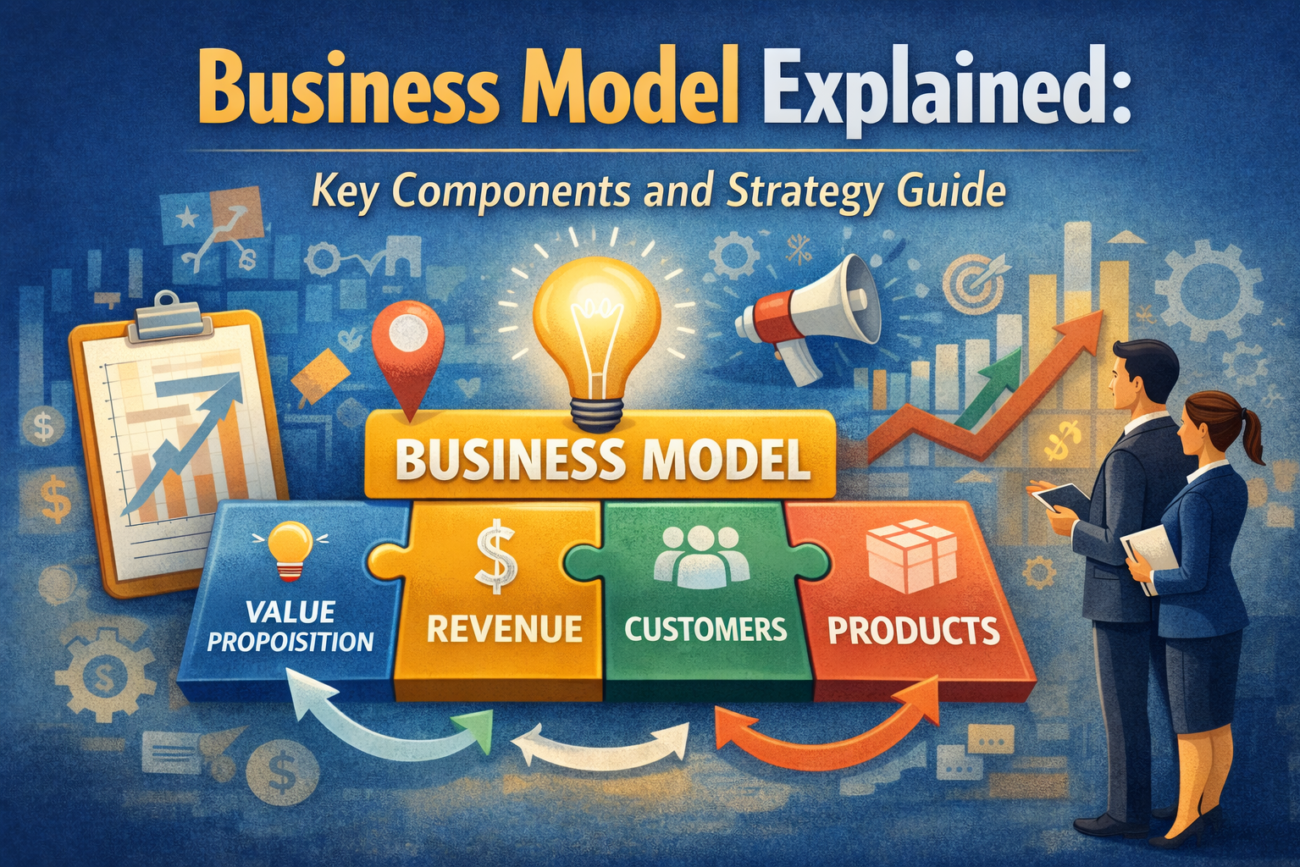
A business model describes how a company creates, delivers, and captures value. It is the framework that explains how a business operates and makes money.
Key Components:
- Value Proposition – What problem your product or service solves
- Revenue Streams – How your business earns money
- Customer Segments – Who your business serves
- Channels – How products or services reach customers
- Cost Structure – Expenses involved in running the business
Example: Netflix’s business model focuses on subscription-based revenue, delivering digital content to millions worldwide through online streaming platforms.
Types of Business Models
Understanding the types of business models helps entrepreneurs and investors identify the best fit for their venture:
1. B2C (Business-to-Consumer)
- Directly sells products or services to consumers
- Example: Amazon, Netflix
2. B2B (Business-to-Business)
- Provides products or services to other businesses
- Example: Salesforce, HubSpot
3. Subscription Model
- Customers pay recurring fees for access
- Example: Spotify, Adobe Creative Cloud
4. Freemium Model
- Offers free basic services with paid premium upgrades
- Example: LinkedIn, Dropbox
5. Marketplace Model
- Connects buyers and sellers, earning commissions or fees
- Example: Airbnb, eBay
6. On-Demand Model
- Provides instant access to goods or services
- Example: Uber, DoorDash
7. Franchise Model
- Expands business through licensing agreements
- Example: McDonald’s, Subway
Insight: Many successful companies combine multiple models for maximum revenue potential.
How to Create a Business Model
Step 1: Define Your Value Proposition
- Identify the problem your product/service solves
- Clarify why customers choose your solution over alternatives
Step 2: Identify Customer Segments
- Understand demographics, behaviors, and needs
- Prioritize high-value segments
Step 3: Determine Revenue Streams
- Product sales, subscriptions, advertising, licensing, commissions
Step 4: Choose Channels
- Online, retail, mobile apps, direct sales, distribution partners
Step 5: Build Customer Relationships
- Personalization, loyalty programs, customer support
Step 6: Identify Key Resources
- Employees, technology, intellectual property, capital
Step 7: Define Key Activities
- Production, marketing, sales, service delivery
Step 8: Establish Partnerships
- Suppliers, distributors, technology partners
Step 9: Map Cost Structure
- Fixed and variable costs, operational expenses, marketing budget
Pro Tip: Use financial modeling tools to project profitability and validate your business model.
Business Model Canvas Explained
The Business Model Canvas is a visual framework to design, analyze, and innovate business models. Developed by Alexander Osterwalder, it consists of nine building blocks:
| Block | Description |
| Customer Segments | Who you serve |
| Value Propositions | What you offer and why it’s unique |
| Channels | How you deliver value |
| Customer Relationships | How you interact and retain customers |
| Revenue Streams | How you earn money |
| Key Resources | Essential assets for operations |
| Key Activities | Core business operations |
| Key Partnerships | External collaborations for success |
| Cost Structure | Expenses associated with your business |
Example: For a subscription-based streaming service:
- Customer Segments: Entertainment seekers, age 18–45
- Value Proposition: Unlimited access to movies and TV shows
- Channels: App, website, smart TVs
- Revenue Streams: Monthly subscription fees
Insight: The canvas provides a clear visual of business operations, helping entrepreneurs pivot or innovate effectively.
Business Model Examples
Example 1: E-Commerce
- Company: Amazon
- Model: B2C + Marketplace
- Revenue: Product sales, subscription fees, advertising
Example 2: Subscription
- Company: Netflix
- Model: Subscription-based streaming
- Revenue: Recurring monthly fees
Example 3: Freemium
- Company: Dropbox
- Model: Freemium SaaS
- Revenue: Premium plans for additional storage
Example 4: On-Demand
- Company: Uber
- Model: On-demand ride-sharing
- Revenue: Commission per ride, surge pricing
Example 5: Franchise
- Company: McDonald’s
- Model: Franchise
- Revenue: Franchise fees, royalties, product sales
Pro Tip: Analyze competitors’ business models to identify market opportunities and differentiate your offering.
Advantages of a Strong Business Model
- Clarity in Strategy – Guides company decisions and growth
- Attracts Investors – Clear revenue and profitability model is essential for funding
- Operational Efficiency – Aligns key activities and resources
- Customer-Centric – Focuses on value creation for target segments
- Flexibility – Allows pivoting in response to market changes
Common Mistakes in Business Model Design
- Ignoring Customer Needs – Failing to understand target audience
- Overcomplicating Revenue Streams – Too many channels can dilute focus
- Neglecting Cost Structure – Leads to unprofitable operations
- Copying Competitors – Lack of differentiation reduces competitive advantage
- Failure to Innovate – Static models risk obsolescence in 2026
Pro Tip: Use the Business Model Canvas to continuously refine and validate your business model.
Business Model Trends to Watch in 2026
- Digital Transformation – AI, SaaS, and e-commerce growth
- Subscription Economy – Recurring revenue models dominate
- Platform Economy – Marketplaces connecting users and providers
- Sustainability Models – Eco-friendly, ethical business models gain traction
- Hybrid Models – Combining B2B, B2C, subscription, and freemium
Insight: Adapting business models to emerging trends ensures long-term relevance and profitability.
KPI Metrics to Track Business Model Performance
| Metric | Purpose | How to Measure |
| Revenue Growth | Measures income increase | Compare sales period over period |
| Gross Profit Margin | Core profitability | (Revenue – COGS) ÷ Revenue × 100 |
| Customer Acquisition Cost | Cost efficiency | Marketing and sales spend ÷ new customers |
| Lifetime Value (LTV) | Customer profitability | Average revenue per customer × retention period |
| Churn Rate | Customer retention | % of lost customers per period |
| Operational Costs | Efficiency | Track fixed and variable expenses |
Pro Tip: Tracking KPIs helps validate your business model’s effectiveness.
FAQ Section (Schema-Style)
1. What is business model meaning?
A business model explains how a company creates, delivers, and captures value, including revenue streams, cost structure, and target customers.
2. What are the types of business models?
Common types include B2C, B2B, subscription, freemium, marketplace, on-demand, and franchise models.
3. How do you create a business model?
Identify value proposition, customer segments, revenue streams, channels, relationships, key activities, resources, partnerships, and costs.
4. What is a business model canvas?
A visual framework of nine building blocks for designing, analyzing, and innovating a business model.
5. Can a business have multiple business models?
Yes, hybrid models combining B2B, subscription, marketplace, or freemium strategies are common in 2026.
6. Why is a strong business model important?
It provides clarity, attracts investors, ensures operational efficiency, and helps deliver value to customers.
7. What are examples of business models?
Amazon (B2C + Marketplace), Netflix (Subscription), Dropbox (Freemium), Uber (On-demand), McDonald’s (Franchise).
Expert Tips for Business Model Success
- Validate with Market Research – Ensure demand exists for your value proposition
- Monitor Trends – Stay ahead with digital and sustainability trends
- Test Revenue Streams – Pilot new pricing or subscription options
- Use the Business Model Canvas – Map operations and identify gaps
- Focus on Customers – Prioritize customer value and retention
Final Verdict: Business Models in 2026
A well-defined business model is essential for startup success and established companies alike.
Key takeaways:
- Defines how a business creates and captures value
- Guides strategic decisions and operational efficiency
- Can evolve with market trends, technology, and customer needs
- Strong business models attract investors and ensure long-term profitability
Pro Tip: Regularly review and refine your business model to adapt to 2026’s fast-changing business environment.
Take Action
- Map your business using the Business Model Canvas
- Compare your model against successful examples in your industry
- Track KPIs to measure performance
- Adjust pricing, channels, and customer strategies based on market trends
- Innovate continuously to stay competitive and profitable
